Why This Matters
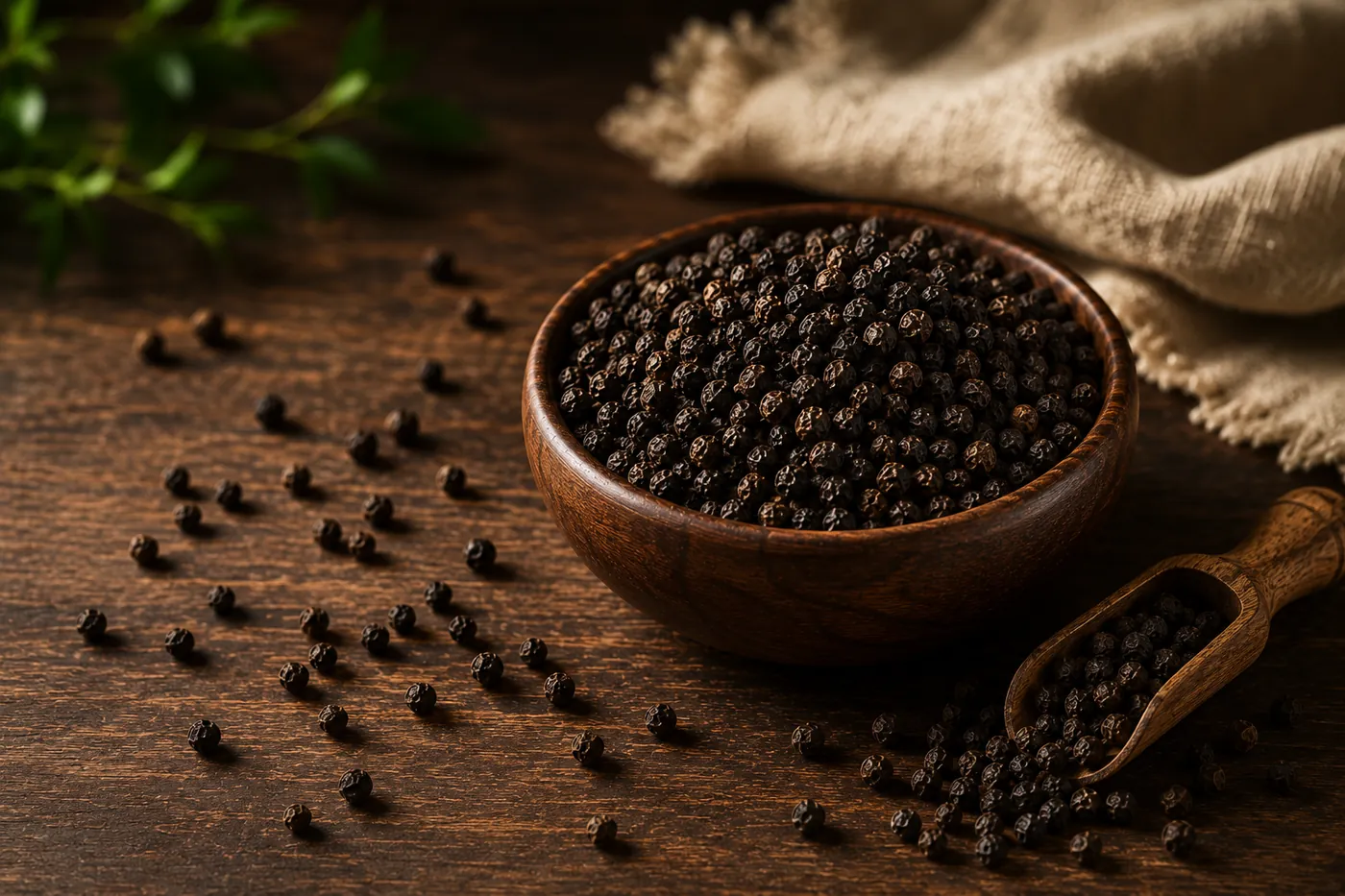
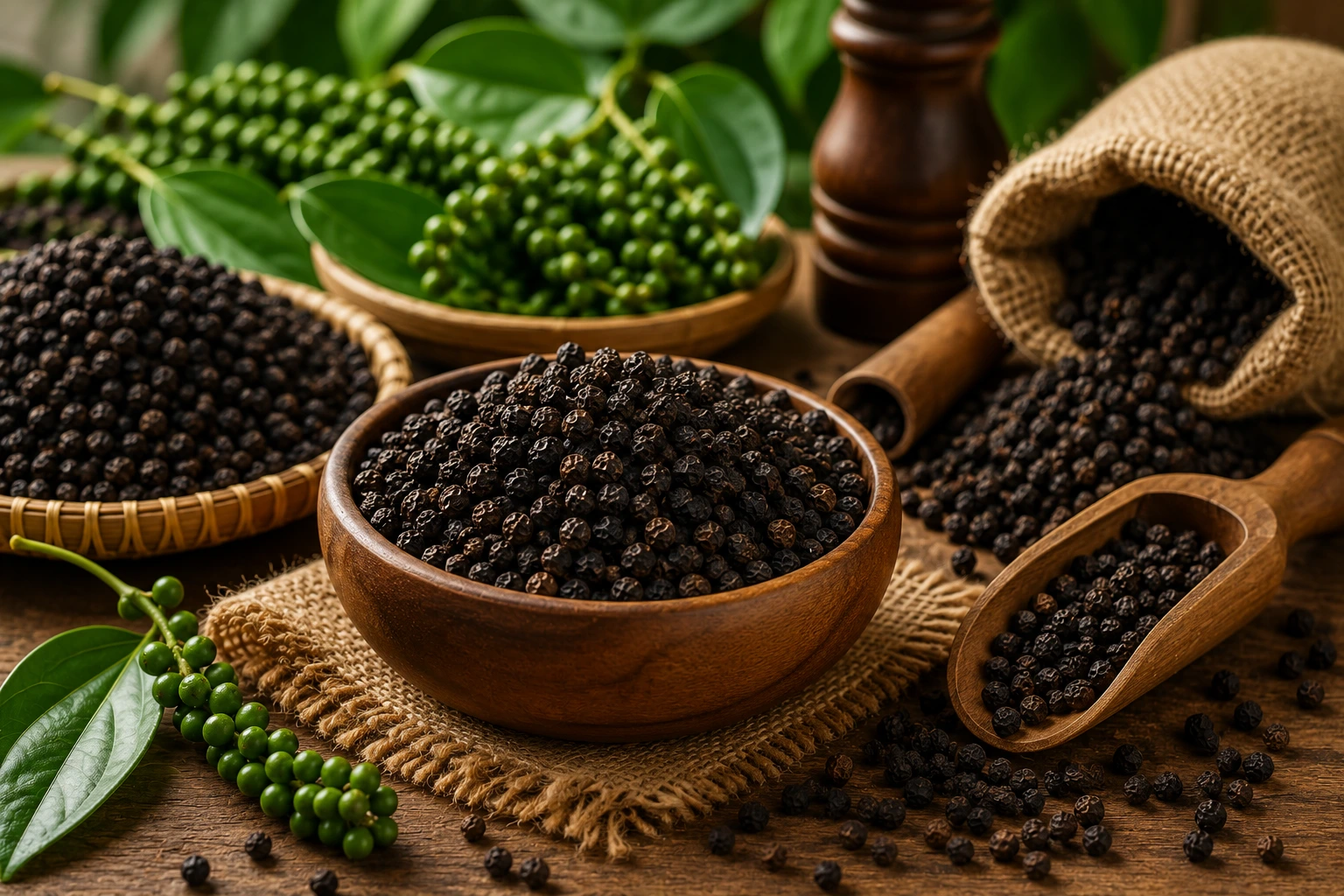
Indonesia has been a significant global source of black pepper (Piper nigrum) for generations, with Lampung province in southern Sumatra historically recognized as one of the country's principal growing regions. Source verification pending For procurement teams evaluating black pepper as a raw material — whether for food manufacturing, private-label spice blends, or distribution — the practical question is rarely "is Indonesian pepper good pepper." It is: which grade, at what specification, from which supplier, meets a specific product formulation and regulatory requirement.
This guide is organized around that question.
Who This Guide Is For
Written for food manufacturers, ingredient buyers, spice distributors, and private label companies evaluating black pepper as a commercial input rather than a retail purchase.
Understanding Indonesian Black Pepper Grades
Indonesian black pepper is typically graded on a combination of factors, most commonly:
- Bulk density, often expressed as grams per liter, which correlates with kernel maturity and moisture
- Piperine content, the compound responsible for pepper's characteristic pungency, and a key quality marker for food and flavor applications
- Foreign matter and light-berry percentage, affecting both purity and processing yield
- Moisture content, critical for storage stability and mold-risk management
| Grade Indicator | Typical Buyer Application |
|---|---|
| High bulk density, low light-berry % | Whole-pepper retail packaging, premium food service |
| Standard export grade | Food manufacturing, industrial grinding |
| Lower bulk density, higher tolerance blends | Extraction/oleoresin processing, blended spice products |
Exact grading nomenclature and thresholds vary by exporter and by the standard referenced (e.g., ASTA cleanliness specifications versus a buyer's own internal specification), so buyers should always request a supplier's specific grading sheet rather than assuming a universal standard applies.
Growing Regions and Why Origin Matters
Lampung is the origin most commonly associated with Indonesian black pepper in international trade, though pepper is also grown in other regions of Sumatra, Kalimantan, and parts of Sulawesi. Source verification pending Origin matters to buyers for several reasons:
- Flavor and aroma profile consistency, which can vary meaningfully by growing region and soil conditions
- Harvest timing, which affects supply availability and price seasonality
- Traceability, increasingly relevant for buyers responding to their own customers' supply-chain transparency requirements
Buyers formulating a product where flavor consistency is critical should request origin-specific sourcing commitments in writing, rather than accepting a general "Indonesian origin" designation that could span multiple regions and harvest lots.
Black Pepper Specification Checklist
When issuing an RFQ for Indonesian black pepper, a complete specification typically includes:
- Bulk density (g/L)
- Piperine content (%)
- Moisture content (% maximum)
- Foreign matter (% maximum)
- Light berries / defective berries (% maximum)
- Microbial limits relevant to destination market (e.g., Salmonella, total plate count)
- Pesticide residue limits (MRLs) applicable in destination market
- Packaging format and unit weight
- Whole vs. ground, and if ground, mesh/particle size requirement
Buyer Tip
Requesting a Certificate of Analysis against this exact checklist, rather than a generic product sheet, is the most reliable way to confirm a supplier's actual quality-control discipline before committing to an order.
Comparing Black Pepper Formats
| Format | Typical Use Case | Buyer Consideration |
|---|---|---|
| Whole black pepper | Retail packaging, food service, grinding at point of use | Longest shelf-stable format; flavor retention is generally strongest |
| Cracked/crushed pepper | Blended spice products, coating applications | Faster flavor release; shorter practical shelf life once processed |
| Ground black pepper | Ready-to-use industrial and food-service applications | Requires tighter moisture and packaging control to prevent caking and flavor loss |
| Pepper oleoresin/extract | Flavor manufacturing, processed food applications | Requires specialized extraction supply chain; distinct specification parameters (oleoresin content, solvent residue where applicable) |
Packaging and Storage Considerations
Black pepper is hygroscopic and sensitive to both moisture and light. Buyers should confirm:
- Packaging material (jute with liner, PP woven bags, vacuum-sealed for smaller commercial units)
- Net weight per unit and container loading configuration
- Recommended storage conditions on arrival (cool, dry, away from direct sunlight)
- Shelf-life claims and how they were validated
A supplier able to specify packaging in terms of moisture-barrier performance, not just bag type, is generally demonstrating a more rigorous approach to post-harvest quality control.
Documentation to Request
In addition to the general export documentation covered in How to Import Spices from Indonesia, black pepper buyers should specifically request:
- Certificate of Analysis matching the buyer's specification checklist above
- Phytosanitary Certificate
- Certificate of Origin, particularly relevant where preferential tariff treatment applies
- Where applicable, organic or other relevant certification documentation, verified independently with the issuing body
Evaluating Supply Consistency
A single strong shipment does not confirm ongoing supply reliability. Buyers evaluating a black pepper supplier for a recurring relationship should ask directly about:
- Volume capacity relative to the buyer's projected order size, including peak-season availability
- Lot-to-lot consistency practices — how the supplier manages blending across harvest lots to maintain a stable specification
- Contingency planning for adverse harvest conditions, and how communication is handled if a shipment cannot meet the agreed specification
Export Insight
These supply-consistency questions are as relevant to due diligence as the specification sheet itself, and a supplier's willingness to answer them candidly is itself informative.
Common Buyer Mistakes
Comparing prices on different specifications
Comparing quoted prices without first confirming both quotes reference the same grade and specification.
Treating one sample as proof of consistency
Accepting a single sample as representative of ongoing supply without a stated consistency commitment.
Overlooking piperine content
Favoring price and bulk density alone, particularly for flavor-sensitive applications.
Not confirming destination-market limits upfront
Failing to confirm microbial and pesticide-residue limits before shipment, risking rejection at customs.