Why This Matters
Indonesia has long been recognized as one of the world's leading producers of premium white pepper. Its clean appearance, distinctive aroma, and consistent quality make it a preferred choice for food manufacturers, seasoning producers, wholesalers, and retail brands worldwide.
However, successful purchasing begins with clearly defined specifications rather than product names alone. White pepper exported to international markets is evaluated through measurable quality standards that help buyers receive consistent shipments and minimize commercial risk.
A quotation stating only "White Pepper" provides very little technical information.
Experienced importers specify measurable characteristics that reflect how the product will perform during processing, packaging, storage, and distribution.
Well-defined specifications reduce misunderstandings, simplify supplier comparisons, and improve consistency across repeat orders.
Understanding Indonesian White Pepper
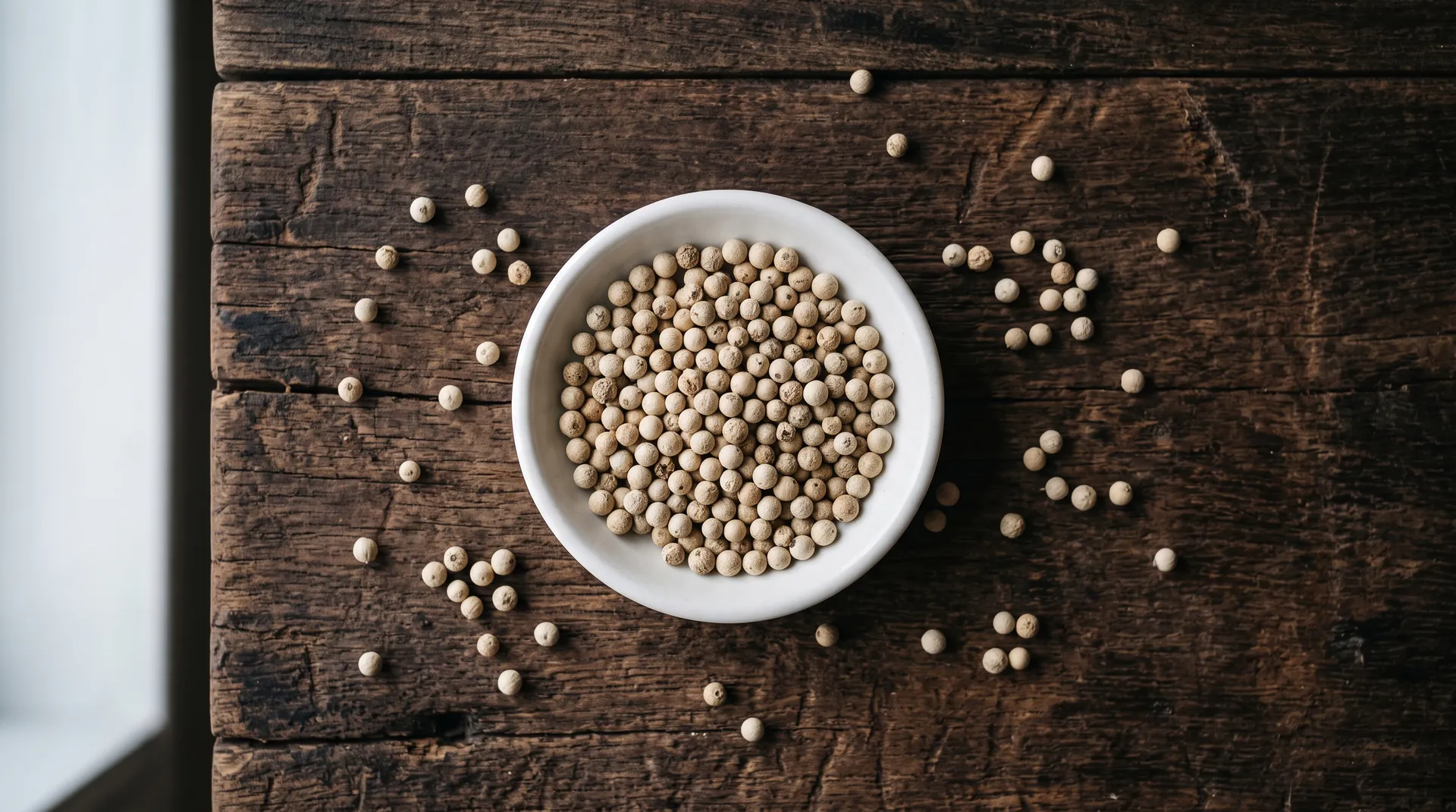
White pepper is produced from fully ripened pepper berries that undergo a soaking and cleaning process to remove the outer skin before drying.
This process produces the characteristic cream-colored peppercorn that is widely used throughout the food industry.
Compared with black pepper, white pepper offers a milder appearance while maintaining its distinctive flavor profile.
The quality of the finished product depends on careful processing, controlled drying, thorough cleaning, and consistent inspection before export.
Key Export Specifications
1. Color
High-quality Indonesian white pepper should display a clean cream to light beige color.
Uniform color generally indicates consistent processing and drying.
Excessive discoloration may result from:
- Poor drying conditions
- Improper storage
- Uneven processing
- Moisture exposure
2. Cleanliness
Cleanliness remains one of the most important purchasing criteria.
Professional exporters remove:
- Remaining skin fragments
- Dust
- Small stones
- Plant material
- Foreign matter
A cleaner shipment improves manufacturing efficiency and reduces additional processing by the buyer.
3. Moisture Content
Proper moisture control helps preserve product quality throughout international transportation.
Excess moisture increases the risk of:
- Mold
- Product deterioration
- Reduced shelf life
- Condensation inside containers
Moisture specifications should always be agreed before production begins.
4. Density
Density influences overall product quality and processing consistency.
Higher-density pepper generally reflects:
- Better-developed berries
- Improved uniformity
- Consistent drying
- Better processing performance
Density requirements vary according to buyer specifications.
5. Uniformity
Buyers generally prefer shipments with consistent:
- Berry size
- Shape
- Color
- Physical condition
Uniform products create a more consistent finished product for manufacturers and retail packaging.
Choosing Specifications Based on Application
Different industries prioritize different quality characteristics.
Food Manufacturers
Typically focus on:
- Consistent supply
- Moisture control
- Processing efficiency
- Stable quality
Spice Blenders
Often prioritize:
- Uniform appearance
- Cleanliness
- Aroma
- Density
Retail Packaging
Retail brands generally require:
- Attractive appearance
- Consistent color
- Reliable packaging
- Stable product quality
Understanding the final application allows suppliers to recommend the most suitable specification.
Packaging for Export
Proper packaging protects product quality during storage and sea transportation.
Common export formats include:
- PP woven bags
- Kraft multiwall bags
- Moisture-barrier liners
- Retail-ready packaging upon request
Packaging should always be selected according to commodity characteristics and shipping route.
Inspection Before Shipment
Every export shipment should be inspected before loading.
Inspection normally verifies:
- Product specifications
- Moisture condition
- Packaging integrity
- Labeling
- Quantity
- Shipment readiness
This process helps ensure the exported product matches the agreed specifications.
Export Insight
Experienced buyers understand that consistent white pepper quality is achieved through disciplined processing and inspection rather than relying on harvest conditions alone.
Reliable suppliers invest in quality control throughout every stage—from sourcing and cleaning to packaging and final container loading.
White Pepper Specification Checklist
| Inspection Item | Why It Matters |
|---|---|
| Color | Visual consistency |
| Cleanliness | Manufacturing efficiency |
| Moisture | Storage stability |
| Density | Product quality |
| Uniformity | Processing consistency |
| Packaging | Export protection |
Common Buyer Mistakes
Buying Without Clear Specifications
Request measurable quality requirements instead of general product descriptions.
Ignoring Moisture Requirements
Moisture should always be verified before shipment, particularly for long-distance ocean freight.
Comparing Prices Without Reviewing Quality
Different quotations often reflect differences in processing quality, sorting, packaging, and inspection standards.
Skipping Sample Approval
Representative samples provide valuable confirmation before production begins.
Overlooking Packaging
Packaging plays an important role in protecting white pepper during transportation and storage.
Glossary
| Term | Meaning |
|---|---|
| White Pepper | Fully ripened pepper with outer skin removed |
| Density | Relative weight and compactness of peppercorns |
| Moisture Content | Water remaining after drying |
| Foreign Matter | Materials other than the intended product |
| Sample Approval | Buyer confirmation before production |
Key Takeaways
- Clear specifications are essential for successful purchasing.
- Moisture and cleanliness are critical export quality indicators.
- Packaging should be selected according to shipping conditions.
- Representative samples reduce procurement risk.
- Consistency is achieved through inspection, processing, and controlled export preparation.