Why This Matters
Indonesia is one of the world's leading producers of cloves, supplying food manufacturers, spice processors, tobacco industries, wholesalers, and distributors across international markets.
Although cloves may appear similar at first glance, export buyers understand that quality differences directly affect aroma, oil content, processing performance, storage stability, and ultimately product value.
Knowing how Indonesian cloves are evaluated helps buyers compare suppliers more effectively and establish clear purchasing specifications before production begins.
One of the most common mistakes made by first-time buyers is requesting "premium cloves" without defining what premium actually means.
Unlike standardized industrial products, agricultural commodities naturally vary between harvest seasons, growing regions, and processing methods.
Instead of relying on marketing descriptions, buyers should evaluate measurable quality characteristics that can be inspected before shipment.
Clear specifications reduce misunderstandings and improve consistency across repeat orders.
Understanding Indonesian Cloves
Cloves are the dried flower buds of the clove tree (Syzygium aromaticum).
Indonesia has cultivated cloves for generations and remains one of the world's most important producing countries.
Export-quality cloves are carefully harvested before flowering, then dried under controlled conditions until they reach suitable moisture levels for storage and international shipment.
Proper harvesting and drying help preserve:
- Essential oil content
- Natural aroma
- Bud integrity
- Color consistency
- Shelf life
These characteristics are especially important for food manufacturers and spice processors.
Key Quality Factors Buyers Should Evaluate
Rather than focusing on marketing labels, experienced buyers evaluate several measurable characteristics.
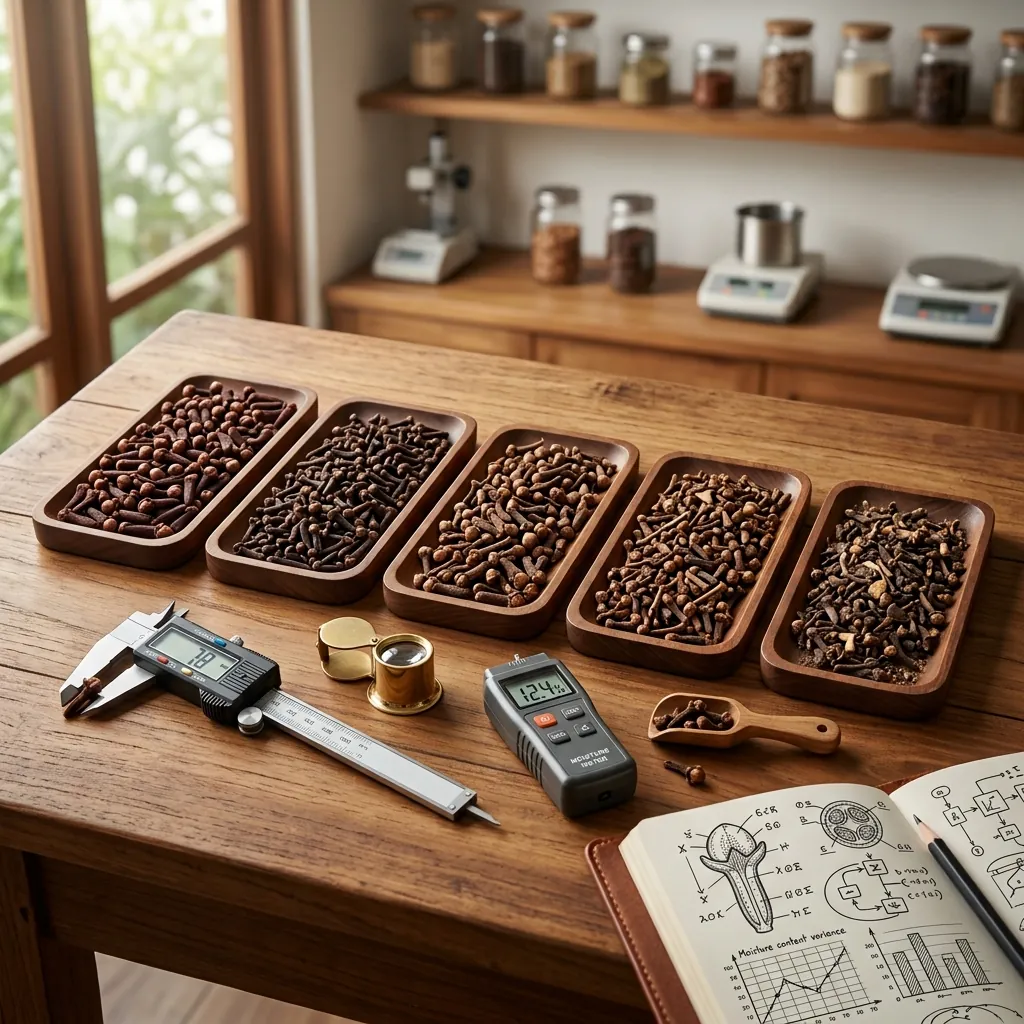
1. Bud Size and Uniformity
Uniform cloves improve processing efficiency and create a more consistent finished product.
A shipment containing mixed sizes may still meet specifications, but greater uniformity is generally preferred for premium applications.
Inspect for:
- Similar bud length
- Consistent head size
- Even appearance
- Limited broken pieces
2. Color
Healthy export-quality cloves typically display a rich dark brown color.
Excessively pale cloves may indicate immature harvesting.
Very dark or blackened cloves can suggest excessive drying or poor storage conditions.
Color alone should never determine quality but should always be assessed alongside other characteristics.
3. Aroma
Cloves are valued primarily for their essential oil.
A strong natural aroma usually indicates good preservation of volatile compounds.
A weak or flat smell may result from:
- Improper drying
- Extended storage
- Poor handling
- Moisture exposure
Aroma evaluation remains an important part of physical inspection.
4. Moisture Content
Moisture management is critical for export.
Excess moisture may increase the risk of:
- Mold development
- Quality deterioration
- Reduced shelf life
- Condensation during sea freight
The acceptable moisture level should always be agreed between buyer and supplier according to destination requirements.
5. Cleanliness
Export shipments should be free from unnecessary foreign materials.
Inspection generally includes checking for:
- Dust
- Leaves
- Small branches
- Stones
- Fibers
- Other contaminants
Effective cleaning improves both product quality and buyer confidence.
6. Physical Condition
Whole cloves should remain structurally intact.
Buyers generally evaluate:
- Broken buds
- Crushed material
- Insect damage
- Visible defects
- Foreign matter
Higher physical consistency usually reflects better handling throughout production.
Harvest Timing Matters
Harvest maturity has a direct impact on export quality.
Flower buds harvested too early may produce:
- Lower aroma
- Smaller size
- Less consistent appearance
Late harvesting may increase the likelihood of partially opened flower buds, which are generally less desirable for many export applications.
Experienced sourcing teams monitor harvest timing carefully to maintain product consistency.
Drying and Post-Harvest Handling
Quality is influenced not only by cultivation but also by post-harvest processing.
Proper drying helps preserve:
- Aroma
- Oil retention
- Natural color
- Storage stability
Drying too quickly or under unsuitable conditions can negatively affect product appearance and overall quality.
After drying, cloves are typically cleaned, sorted, and prepared for export packaging.
Packaging Considerations
Packaging protects product quality during transportation and storage.
Common export packaging includes:
- PP woven bags
- Kraft multiwall bags
- Moisture-barrier liners (when required)
Packaging selection depends on:
- Shipment volume
- Destination market
- Buyer specifications
- Shipping duration
Appropriate packaging helps reduce exposure to humidity during international sea freight.
Why Inspection Before Shipment Is Important
Every shipment should be inspected before loading.
Inspection commonly verifies:
- Product appearance
- Packaging condition
- Quantity
- Labeling
- Moisture condition
- Overall shipment readiness
Pre-shipment inspection reduces the risk of disputes after arrival.
Export Insight
Professional spice exporters do not rely solely on harvest quality.
Consistency comes from combining responsible sourcing, careful inspection, proper sorting, controlled packaging, and documented quality checks before every shipment.
For repeat buyers, consistency is often more valuable than simply receiving the highest possible grade.
Comparison Checklist for Buyers
| Inspection Item | Why It Matters |
|---|---|
| Bud Uniformity | Consistent processing and presentation |
| Color | Indicates harvesting and drying quality |
| Aroma | Reflects essential oil preservation |
| Moisture | Supports storage stability |
| Cleanliness | Reduces contamination risk |
| Physical Integrity | Indicates careful handling |
| Packaging | Protects product during shipment |
Common Buyer Mistakes
Buying Only by Price
Lower prices may reflect differences in cleaning, sorting, or product consistency.
Comparing quotations without reviewing specifications can lead to unexpected quality variations.
Assuming Every Supplier Uses the Same Grade Names
Terms such as "Premium," "Grade A," or "Export Quality" are not internationally standardized.
Always request detailed product specifications instead of relying on marketing terminology.
Ignoring Moisture Requirements
Moisture should be confirmed before shipment, particularly for long-distance sea freight.
Proper moisture management supports product stability during transportation.
Focusing Only on Appearance
Good color alone does not guarantee high-quality cloves.
Aroma, cleanliness, physical condition, and consistency should also be evaluated.
Skipping Sample Approval
Whenever possible, buyers should review representative samples before confirming production for larger orders.
Glossary
| Term | Meaning |
|---|---|
| Whole Cloves | Entire dried flower buds prepared for export |
| Moisture Content | Amount of water remaining in the product after drying |
| Foreign Matter | Materials other than the intended product |
| Sorting | Removing defective or unwanted material |
| Essential Oil | Natural aromatic compounds contained within cloves |
Key Takeaways
- Product specifications are more important than marketing grade names.
- Consistency is achieved through sourcing, inspection, sorting, and packaging.
- Moisture management is essential for successful export shipments.
- Appearance should be evaluated together with aroma and cleanliness.
- Pre-shipment inspection helps reduce quality disputes.