Why This Matters
International trade depends on more than product quality. Even when goods are prepared correctly, incomplete or inaccurate documentation can delay customs clearance, increase costs, or postpone delivery.
For first-time importers, export documentation often appears complex because multiple parties—including exporters, freight forwarders, shipping lines, customs authorities, banks, and importers—use different documents throughout the shipment process.
Understanding the purpose of each document helps buyers communicate more effectively with suppliers while reducing the risk of administrative errors.
Many shipment delays are not caused by production problems but by incomplete or incorrect documentation.
Incorrect consignee details, missing certificates, inconsistent product descriptions, or inaccurate quantities may result in customs delays or additional administrative costs.
Reviewing documentation requirements before shipment allows exporters and buyers to prepare the necessary paperwork in advance.
Why Export Documentation Is Important
Every export shipment creates a legal and commercial record.
Documentation helps confirm:
- Product identity
- Quantity
- Value
- Ownership
- Country of origin
- Shipping arrangements
- Regulatory compliance
Without proper documentation, customs authorities cannot verify the shipment before it enters the destination country.
Common Export Documents
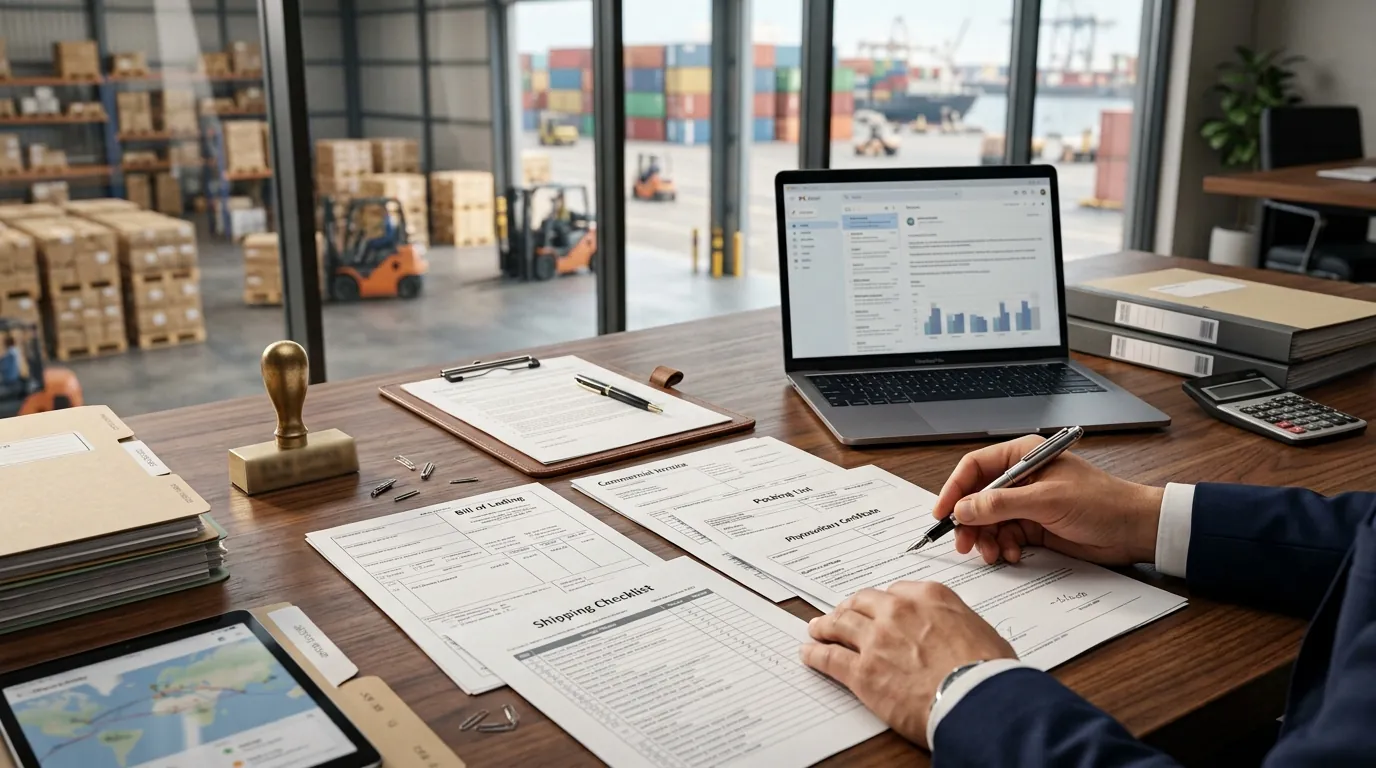
Although documentation requirements differ by market, several documents appear in most international shipments.
Commercial Invoice
The Commercial Invoice records the financial transaction between buyer and seller.
It typically contains:
- Buyer information
- Seller information
- Product description
- Quantity
- Unit price
- Total value
- Incoterms
- Payment terms
This document forms the basis for customs valuation in many countries.
Packing List
Unlike the Commercial Invoice, the Packing List focuses on physical shipment details.
Typical information includes:
- Number of bags or cartons
- Net weight
- Gross weight
- Dimensions
- Packaging type
- Shipping marks
Warehouse personnel, freight forwarders, and customs officers frequently rely on this document during cargo handling.
Bill of Lading (B/L)
The Bill of Lading is issued by the shipping line after cargo has been loaded.
It serves several important functions:
- Receipt of cargo
- Contract of carriage
- Document of title
Importers generally require the Bill of Lading before claiming cargo at the destination port.
Certificate of Origin (COO)
The Certificate of Origin identifies where the products were produced.
Some importing countries require this document for:
- Customs procedures
- Tariff preferences
- Trade agreements
- Regulatory compliance
Requirements depend on destination country regulations.
Phytosanitary Certificate
Agricultural products often require a Phytosanitary Certificate.
This document confirms that the shipment complies with plant health requirements established by the importing country.
Whether this certificate is required depends on both the commodity and destination market.
Certificate of Analysis (COA)
Some buyers request laboratory testing before shipment.
A Certificate of Analysis may include:
- Moisture content
- Physical characteristics
- Product quality parameters
- Other agreed specifications
Testing requirements depend on customer requirements and intended application.
How Documents Work Together
Each document supports a different stage of the export process.
For example:
| Stage | Typical Document |
|---|---|
| Sales Agreement | Purchase Order |
| Production | Product Specification |
| Packing | Packing List |
| Export Clearance | Commercial Invoice |
| Vessel Loading | Bill of Lading |
| Destination Customs | Certificate of Origin |
| Quality Verification | Certificate of Analysis |
Together these documents create a complete record of the shipment.
Who Prepares Each Document?
Not every document is issued by the exporter.
Examples include:
| Document | Prepared By |
|---|---|
| Commercial Invoice | Exporter |
| Packing List | Exporter |
| Bill of Lading | Shipping Line |
| Certificate of Origin | Authorized Authority |
| Phytosanitary Certificate | Government Authority |
| Certificate of Analysis | Laboratory or Inspection Body |
Understanding who issues each document helps buyers know where to request revisions if necessary.
Reviewing Documents Before Shipment
Experienced exporters review documentation before container loading.
Typical checks include:
- Buyer information
- Product description
- Quantity
- Packaging
- Container number
- Seal number
- Shipment date
- Incoterms
Correcting documentation before vessel departure is usually easier than making amendments after shipment.
Export Insight
Professional exporters prepare documentation alongside production—not after packing has finished.
This parallel workflow reduces delays and helps ensure that cargo can proceed smoothly through customs and shipping procedures.
Common Buyer Mistakes
Assuming Every Country Requires the Same Documents
Import regulations vary between countries.
Always verify local requirements before shipment.
Waiting Until Cargo Is Ready
Document preparation should begin early, particularly when government-issued certificates are required.
Inconsistent Product Descriptions
The same product description should appear consistently across all major export documents whenever applicable.
Ignoring Incoterms
Documents should reflect the agreed shipping terms to avoid confusion between buyer and seller responsibilities.
Requesting Last-Minute Changes
Changes after vessel departure may require amendments, additional fees, or processing delays.
Glossary
| Term | Meaning |
|---|---|
| Commercial Invoice | Sales document describing the transaction |
| Packing List | Document describing shipment contents |
| Bill of Lading | Shipping document issued by the carrier |
| Certificate of Origin | Document confirming production origin |
| Certificate of Analysis | Laboratory report confirming product specifications |
Key Takeaways
- Export documentation supports customs, shipping, and international trade compliance.
- Different documents serve different operational purposes.
- Early document preparation reduces shipment delays.
- Product information should remain consistent across documentation.
- Documentation review is an essential part of export quality control.